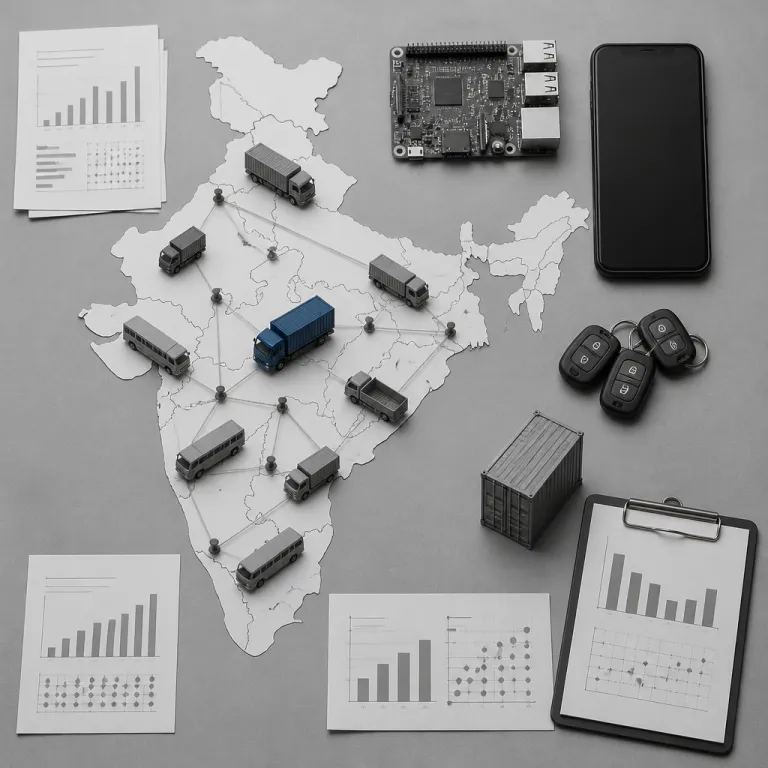
Why AI driven B2B targeting on Meta matters for Indian transport owners
Indian transport business owners operate in a fiercely competitive transportation industry. When you apply artificial intelligence to search engine optimisation and to B2B targeting on Meta for Indian transport business owners, you align your visibility with how real decision makers actually search. This shift turns generic marketing into precise, high intent conversations with logistics managers, fleet operators, and procurement heads.
Most transport businesses still rely on manual targeting, broad ads, and outdated local marketing tactics. Artificial intelligence changes this by analysing real time search engine signals, Meta ads engagement, and social media behaviour to predict which businesses are ready to talk. That prediction layer is where AI powered SEO and performance marketing start to generate consistently high quality B2B leads instead of random clicks.
For a transport agency or logistics brand, the main challenge is not traffic but relevant leads. AI driven B2B targeting on Meta for Indian transport business owners connects search engine optimisation, digital marketing, and Meta ads into one data driven system. The result is higher conversion rates from fewer but more qualified visitors, which matters when margins are thin and fuel, tolls, and compliance costs keep rising.
Artificial intelligence also helps align your content with user intent across multiple journeys. A fleet manager searching Google Ads for “container transport Mumbai to Nhava Sheva” or “FTL trailer service Ahmedabad–Mumbai” expects different information than a real estate developer looking for long term construction material haulage or LTL distribution to multiple sites. AI SEO models can segment these audiences, then adapt content, ads, and email marketing sequences to each industry specific need.
When you treat B2B targeting on Meta for Indian transport business owners as an integrated search engine and social media strategy, you stop guessing. You start using data driven insights from Meta, Google Ads, and your own CRM to refine targeting and messaging every week. That discipline is what separates high converting transport businesses from those that only compete on price.
Mapping user intent for transport decision makers across search and Meta
Effective B2B targeting on Meta for Indian transport business owners begins with a clear map of user intent. Decision makers in transportation businesses rarely search randomly; they follow predictable patterns from problem awareness to vendor selection. AI enhanced SEO tools can cluster these patterns into intent stages, then feed them into Meta ads and other digital marketing channels.
At the awareness stage, a logistics manager might search a search engine for “reduce freight damage on long haul routes” or “improve on time delivery in monsoon”. AI models detect that this audience is not yet ready for direct lead generation, so your content should focus on educational articles, industry specific case studies, and social media thought leadership. The same audience on Meta can be reached with video content explaining route optimisation, warehouse integration, and performance marketing metrics that matter to transport brands.
As intent strengthens, those same users start searching for specific services and local SEO signals. Queries shift towards “full truck load service in Pune”, “cold chain transportation for pharma in Hyderabad”, “last mile delivery Delhi NCR”, or “container trailer agency near Nhava Sheva”. AI powered SEO systems recognise these high intent signals and automatically prioritise high quality landing pages, high converting forms, and remarketing lists for Meta ads and Google Ads.
For Indian transport business owners, the most valuable audience often includes procurement teams in manufacturing, retail, and real estate businesses. These decision makers compare multiple transport brands, check reviews, and evaluate performance guarantees before sharing contact details. AI can score these leads based on behaviour across search engine results, email marketing engagement, and Meta content consumption, then route only the strongest leads to your sales équipe.
Personalisation also extends to geography and local constraints. A transport business serving local routes around Delhi NCR needs different content and targeting than a long haul operator connecting Chennai, Bengaluru, and Mumbai. Studying how niche sectors personalise their funnels, such as wineries turning casual visitors into loyal buyers through specialised SEO for wineries, can inspire similar layered journeys for transport businesses that nurture leads over weeks instead of days.
Building AI informed Meta audiences from search and CRM data
Once user intent is mapped, B2B targeting on Meta for Indian transport business owners becomes a data integration exercise. Artificial intelligence can merge search engine optimisation data, Google Ads logs, and CRM records to build Meta audiences that mirror your best transport clients. This approach turns Meta ads from broad brand awareness tools into precise instruments for lead generation.
Start with your existing high quality clients in manufacturing, e commerce, and real estate sectors. Export CRM data, anonymise it, and let AI models identify shared attributes such as route patterns, shipment volumes, and decision maker roles. These insights help you create lookalike audiences on Meta that reflect real business relationships, not just demographic guesses, which dramatically improves performance marketing efficiency.
For example, consider a hypothetical mid sized transporter in Gujarat that exports two years of CRM data covering 186 active B2B clients. After anonymising company names and contacts, they train a simple clustering model around three attributes: average monthly tonnage, primary corridors (such as Ahmedabad–Mumbai), and typical decision maker titles. In a realistic scenario, the resulting lookalike audience on Meta could reduce cost per lead from roughly ₹1,800 to around ₹1,050 within six weeks, while lead-to-proposal conversion might improve from about 18 percent to close to 29 percent.
Next, connect your website analytics and SEO data to audience building. Visitors who read detailed transportation case studies, pricing pages, and service level agreements show higher intent than those who skim a blog post. AI can score these behaviours in real time, then sync them to Meta custom audiences for remarketing, upselling, or cross selling related transport services.
Local SEO signals also feed into this system. When users from specific industrial clusters, ports, or logistics parks repeatedly search for your brand or related services, AI flags those zones as high potential. You can then run hyper local Meta ads targeting decision makers in those pin codes, supported by content that speaks to local constraints such as congestion, tolls, or last mile delivery challenges.
Transport owners should also learn from how local service sites adapt to algorithm shifts. Analyses of local service SEO updates and template traps show that generic landing pages underperform against tailored, industry specific content. AI helps avoid this trap by generating and testing multiple content variants for different segments, then promoting only the versions that deliver better conversion rates and more qualified leads.
Designing high intent content journeys for Meta and search
Content is the bridge between AI insights and real B2B targeting on Meta for Indian transport business owners. Without structured content journeys, even the best targeting wastes budget on clicks that never convert into leads. Artificial intelligence helps design these journeys by predicting which topics, formats, and calls to action resonate with each audience segment.
For early stage audiences, focus on educational content that addresses broad transportation challenges. Articles on route optimisation, fuel efficiency, and compliance can rank through SEO while also being repurposed as Meta ads creatives and social media posts. AI tools analyse which headlines, visuals, and formats generate the longest engagement, then recommend new content ideas that deepen trust with logistics decision makers.
Mid funnel content should speak directly to business outcomes. Case studies showing improved on time delivery, reduced damage rates, or better utilisation of fleets help transport businesses stand out from generic competitors. When AI detects that users repeatedly engage with such case studies, it can trigger email marketing sequences, retargeting ads, and personalised landing pages that highlight specific services like cold chain, container haulage, last mile distribution, or specialised FTL/LTL haulage.
For high intent visitors, the content must remove friction and clarify next steps. High converting pages include transparent pricing ranges, clear service zones, and simple lead forms that ask only essential details. AI can test variations of these elements, then automatically promote the versions that deliver higher conversion rates and more sales qualified leads from Meta ads and search engine traffic.
Transport owners should also consider how AI generated summaries and answer engines will cite their content. Detailed, structured explanations of transport processes, supported by clear headings and schema markup, increase the chance that AI powered search experiences reference your brand, as explained in this analysis of how answer engines can benefit small businesses. When those citations align with your Meta targeting, you create a loop where search visibility and social ads reinforce each other.
Aligning AI SEO, Meta ads, and performance marketing metrics
Many Indian transport business owners treat SEO, Meta ads, and Google Ads as separate activities. AI driven B2B targeting on Meta for Indian transport business owners works best when these channels share data, goals, and performance marketing metrics. The objective is not more traffic but more profitable contracts from the right businesses.
Start by defining clear KPIs that reflect real business outcomes. Instead of only tracking clicks or impressions, measure cost per qualified lead, proposal acceptance rate, and contract value by channel. As a practical benchmark, many B2B transport firms aim for cost per qualified lead below ₹1,500, proposal win rates above 25 percent, and at least 3x marketing spend in contract value within 90 days. AI analytics platforms can attribute each lead to a mix of SEO, Meta ads, email marketing, and social media touchpoints, revealing which combinations consistently produce high quality transportation contracts.
Next, align bidding and budgeting strategies across platforms. If AI models show that search engine visitors who later see Meta remarketing ads convert at twice the rate, you can justify higher bids for those keywords. Similarly, if certain Meta audiences rarely become leads despite high engagement, AI can recommend budget shifts towards more promising segments or creative formats.
Industry specific nuances matter here. A transport business serving hazardous materials, refrigerated goods, or port logistics will have different sales cycles and compliance requirements than a local courier service. AI can adjust attribution windows, scoring models, and content recommendations to reflect these realities, ensuring that long sales cycles are not penalised in performance reports.
Finally, share insights between your internal équipe and any external marketing agency. When both sides review AI generated dashboards together, they can spot patterns such as seasonal spikes, route specific demand, or emerging sectors like renewable energy logistics. This collaborative, data driven approach keeps B2B targeting on Meta for Indian transport business owners aligned with real market shifts rather than vanity metrics.
Practical roadmap for Indian transport owners adopting AI led SEO and Meta
Adopting AI powered SEO and B2B targeting on Meta for Indian transport business owners does not require a complete overhaul on day one. A phased roadmap helps transport businesses test, learn, and scale without disrupting daily operations. The key is to start with measurable experiments that tie directly to lead generation and revenue.
Phase one focuses on data foundations and intent mapping. Audit your existing website, SEO performance, and Meta ads accounts to identify which pages, keywords, and audiences already attract high intent visitors. Then deploy AI tools to cluster these visitors by industry, route, and service type, creating a clear picture of which decision makers are most valuable to your business.
Phase two introduces AI assisted content and audience building. Use AI to draft outlines for industry specific articles, case studies, and landing pages, then refine them with your on ground expertise about Indian transportation realities. At the same time, build Meta custom audiences from CRM data, website visitors, and search engine behaviour, allowing AI to test different targeting combinations and creative angles.
Phase three scales what works and retires what does not. Double down on the SEO topics, Meta audiences, and email marketing sequences that consistently generate high quality leads and contracts. Reduce spend on broad, low intent campaigns, and reinvest in performance marketing experiments that explore new sectors such as renewable energy, industrial clusters, or cross border logistics.
Throughout this roadmap, remember that AI is a partner, not a replacement, for human judgment. Your knowledge of local roads, regulatory changes, and client expectations remains irreplaceable, while AI handles pattern recognition, forecasting, and optimisation at scale. When both work together, B2B targeting on Meta for Indian transport business owners becomes a strategic advantage rather than a confusing technical chore.
Key statistics on AI, SEO, and Meta performance for B2B transport
- According to a widely cited report by McKinsey on AI in sales and marketing, companies that integrate AI into commercial processes often see around a 10 to 20 percent uplift in revenue, which suggests that transport businesses using AI for SEO and Meta targeting can materially improve contract volumes. Exact impact will vary by sector and execution quality.
- Meta’s own advertising benchmarks indicate that B2B campaigns with precise custom audiences can achieve up to roughly 2 times higher conversion rates than broad targeting, highlighting the value of AI built audiences for Indian transport decision makers.
- Research from HubSpot on marketing automation reports that businesses using automation and AI driven lead scoring can experience several hundred percent growth in qualified leads; one frequently referenced figure is a 451 percent increase, which is particularly relevant for transport owners managing long, complex B2B sales cycles.
- Studies by Google on B2B search behaviour reveal that well over 70 percent of B2B buyers start their research on a search engine, confirming that AI enhanced SEO is a critical entry point before Meta remarketing and email nurturing.
- Data from Salesforce’s State of Marketing reports shows that high performing marketing teams are more than 2 times as likely to use AI for personalisation, suggesting that personalised content journeys for transport buyers are becoming a competitive baseline rather than a luxury.
FAQ about AI SEO and Meta targeting for Indian transport businesses
How does AI improve B2B targeting on Meta for Indian transport owners ?
AI improves B2B targeting on Meta for Indian transport business owners by analysing search engine data, website behaviour, and CRM records to identify patterns among your best clients. These patterns feed into Meta custom and lookalike audiences that mirror real decision makers in logistics, manufacturing, and retail. As a result, your Meta ads reach fewer but more relevant businesses, increasing conversion rates and reducing wasted spend.
What role does SEO play alongside Meta ads for transport businesses ?
SEO attracts high intent visitors who are actively searching for transport solutions, while Meta ads nurture and retarget those visitors over time. When AI connects SEO data with Meta targeting, it can prioritise audiences who have read detailed service pages, case studies, or pricing information. This integration turns isolated clicks into structured lead generation journeys that align with how B2B buyers actually research and shortlist transport partners.
Can small transport agencies in India afford AI driven marketing ?
Many AI capabilities are now built into mainstream digital marketing tools, making them accessible even to small transport agencies. Platforms such as Google Ads, Meta, and popular CRM systems offer automated bidding, audience suggestions, and lead scoring features powered by AI. By starting with focused experiments and clear KPIs, smaller businesses can benefit from AI without large upfront investments in custom technology.
How should transport owners measure success from AI powered campaigns ?
Transport owners should move beyond vanity metrics like clicks and impressions and track cost per qualified lead, proposal win rate, and contract value by channel. A simple starting dashboard might include 30 day and 90 day attribution windows, showing how SEO assisted conversions differ from direct Meta conversions. AI analytics can attribute each lead to combinations of SEO, Meta ads, email marketing, and social media touchpoints, revealing which journeys consistently produce profitable contracts. Reviewing these metrics monthly helps refine targeting, content, and budgets for better long term ROI.
Is AI based personalisation compliant with data privacy regulations in India ?
AI based personalisation can remain compliant if transport businesses respect consent, minimise data collection, and avoid storing unnecessary personal information. Most AI driven targeting on Meta and search relies on aggregated, anonymised signals rather than individual identities. Working with reputable platforms and a responsible marketing agency helps ensure that your AI SEO and Meta strategies align with evolving Indian data protection norms.